03/PERCEPTION STUDIES

YOUR BRAIN
SEES WHAT IT EXPECTS.

Your eyes collect information, but your brain interprets it. Explore how patterns, shapes, and colors can change what you think you see.

01 — THE PROCESS

YOUR BRAIN FILLS IN THE BLANKS.

Perception is more than simply looking. Your brain uses context, experience, and visual clues to make sense of the world around you.

These studies reveal how easily those interpretations can change. Look closely at each image, trust your first impression, and then look again.

02 — VISUAL STUDIES

WHAT DO YOU REALLY SEE?

FOUR WAYS TO QUESTION YOUR EYES

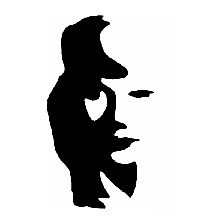
A figure-ground optical illusion that can be interpreted in two different ways
STUDY 01

IT DEPENDS ON WHAT YOU SEE.

The same space can form two different images. Your attention determines which shape becomes the main figure and which becomes the background.

Reveal the idea

This is called figure-ground perception. Your brain separates a visual scene into a subject and its surrounding space.
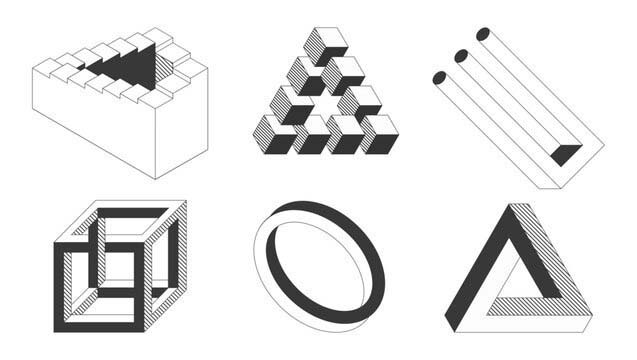
An impossible trident drawing that appears connected but cannot exist as an ordinary solid object
STUDY 02

SPACE CAN DECEIVE YOU.

This impossible object seems believable at first, but its parts cannot fit together in the way the drawing suggests.

Reveal the idea

Your brain tries to interpret the drawing as a three-dimensional object, even when its geometry contradicts itself.

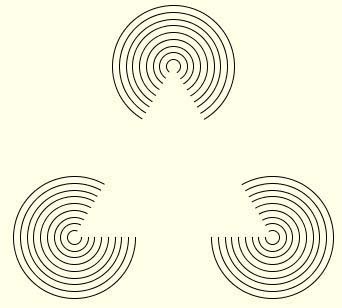
A Kanizsa triangle illusion in which separated shapes create the perception of an outlined triangle
STUDY 03

YOUR BRAIN COMPLETES THE PICTURE.

Even when an outline is missing, you may still perceive a complete shape. Sometimes what you see is created by the spaces between objects.

Reveal the idea

This is an example of visual completion. Your brain organizes separate visual clues into a shape that is not actually drawn.

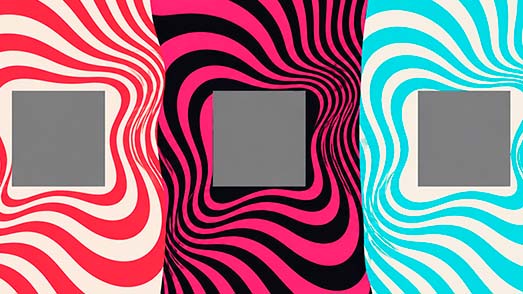
A color assimilation illusion using red and cyan patterns around matching gray squares
STUDY 04

COLOR ISN'T ALWAYS WHAT IT SEEMS.

Surrounding colors and repeating patterns can influence how a color appears. Look at the center shapes and compare what you perceive.

Reveal the idea

In color assimilation, nearby colors can influence the appearance of a target color. The visual context affects how your brain interprets what you see.

03 — QUESTION YOUR VISION

LOOK AGAIN.
THEN LOOK CLOSER.

You have explored how the brain interprets visual information. Now experiment with perception yourself and discover what happens when the rules of seeing begin to change.

EXPLORE THE EXPERIMENTS →